Mama Dolson's Bakery & Hangout – When words fail us, food says love.
 
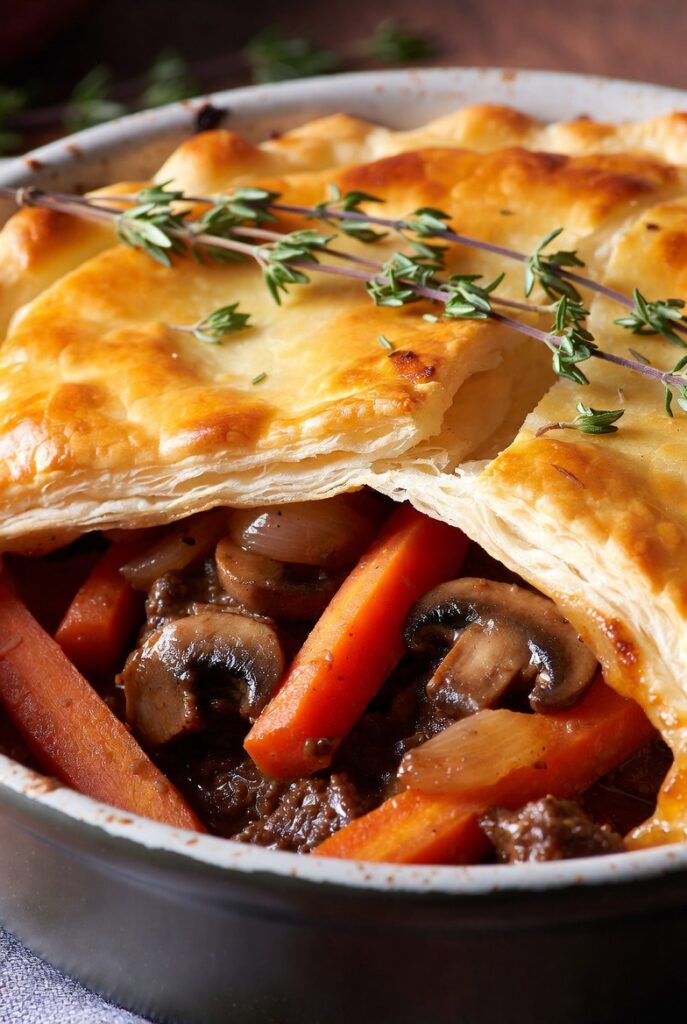
Beef pie made with red wine and Guinness

This is not a recipe for the faint hearted or the time poor. It produces epic beef pie. It can be done, I have put in a couple of short cuts and I break the steps and processes down for you.

This pie has a backstory. The Davinator seeded my YouTube feed with videos from Fallow – a top restaurant in London. I took the bait on Michelin Beef Pie. The pie is a lot of work but worth the effort. Its worth watching the video but I’ve put in some short cuts below to reduce the torment. You’ll appreciate my short cuts and understand your destination.

Original recipe – Michelin Beef Pie

Key simplications in my recipe; don’t brown the meat, make your caramelised onions in the slow cooker, use purchased pastry and only top the ‘pie’. Some people (including some close friends) insist that a pie that is not wholly encased in pastry is actually a casserole and not a pie. Maybe a pot pie. A proper raised pie in pastry is spectacular presentation. Making suet pastry and a raised pie is worthy of a day long cooking course and a lot of practice. Save that hill for another day if you’re not already comfortable with suet pastry and raised pies.

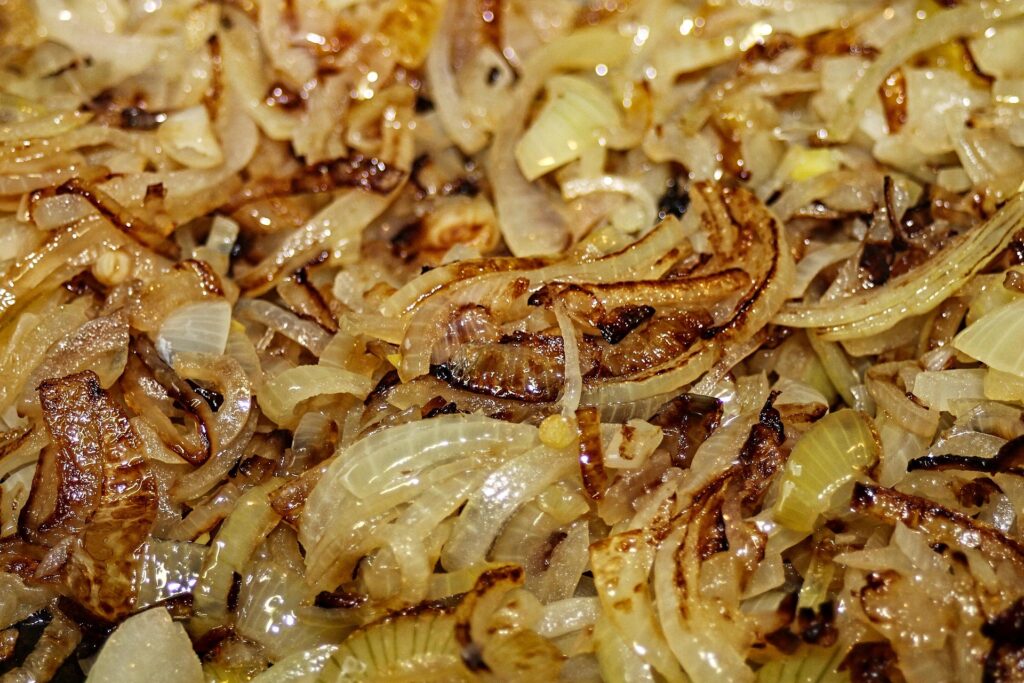
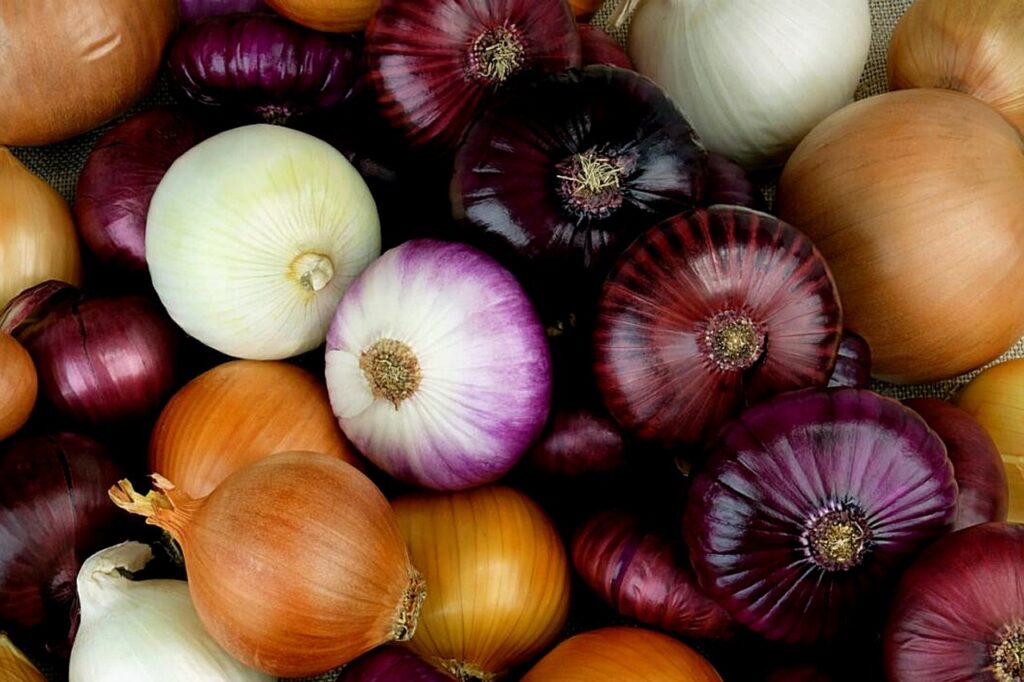
Here’s my recipe for slow cooker caramelised onions. If you cook them overnight, your kitchen smells divine in the morning. Caramelising also gets rid of most of the aromatics so that the onion sensitive in our family don’t have any adverse effects.

I’ve listed all the ingredients below, including the onions in case you decide to make by hand but excluding the pastry.

Recipe

Major cooking processes

  • Make caramelised onions – slow cooker recipe here
  • Cook the beef
  • Make the gravy
  • Make the pie filling vegetables
  • Assemble and cook

INGREDIENTS

For the Braised Beef

  • 1.5–2 kg beef short ribs (on the bone)
  • 1–1.2 kg beef cheeks or beef flank
  • Beef dripping or butter
  • 2 onions, roughly chopped
  • 3 carrots, roughly chopped
  • 2 celery sticks, roughly chopped (optional)
  • 4 cloves garlic, crushed
  • 2 tbsp tomato paste
  • A few sprigs thyme
  • A few sprigs rosemary
  • Sea salt & black pepper
  • ½ bottle red wine
  • 2 pints Guinness (or other stout) ~
  • 75 ml Worcestershire sauce
  • Beef stock (enough to fully submerge meat)

For the Sauce Thickener (Beurre Manié)

  • 50 g beef fat (skimmed from sauce or buy beef dripping, in a pinch, use butter)
  • 50 g plain flour

Pie Filling Vegetables

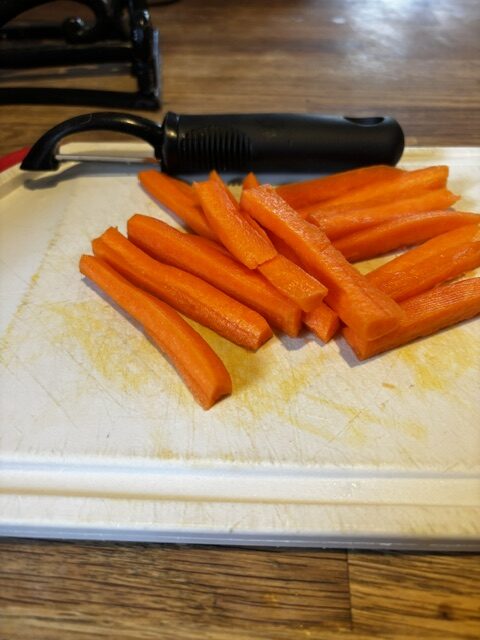
  • 3–4 carrots, cut into batons
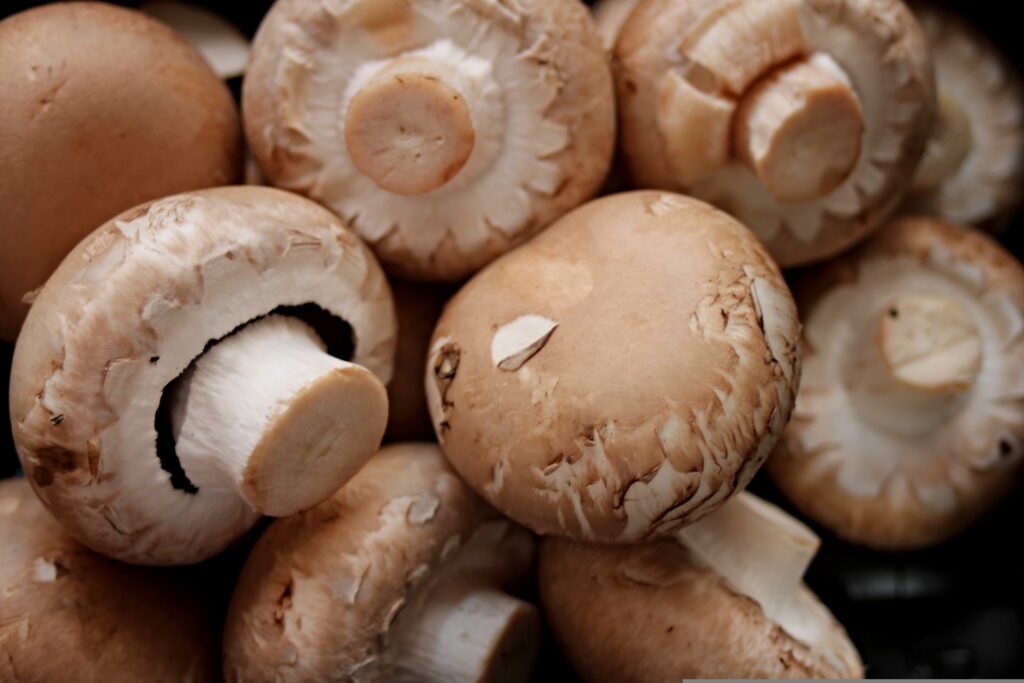
  • 250 g button mushrooms, halved
  • Fresh thyme
  • Butter
  • Salt & pepper

Final assembly

  • egg, beaten (for egg wash)
  • Extra butter for greasing tin

Cook the beef

I do not brown meat that is going to be cooked in pie or stew. Chefs swear by it but I’ve never found it makes a measurable difference to the results. You will be slow cooking this beef for 6-8 hours and then putting it in gravy and then cooking it in a pie. Trust me on this one. Ingredients are above.

  1. Preheat oven to 140C.
  2. Heat several tablespoons of beef dripping in a deep heavy bottomed pan that is suitable for slow cooking in the oven. Le Creuset or the equivalent seems expensive and then one day you realise that your cookware might need a 21st birthday party.
  3. Put the red wine and the guinness in a sauce pan and bring to a low boil, reduce in volume by about 50%.
  4. Saute the rough chopped vegetables in the dripping to give them colour and release flavour.
  5. Add the salt and tomato puree, turn the vegetables so they take up the tomato paste.
  6. Slowly add the wine & guinness mixture plus the Worcestershire sauce to the vegetables.
  7. Add the herbs; either in a bouquet garni bag or tie up fresh herbs with string.
  8. Remove from heat, nestle beef short ribs plus flank or cheek in the mixture.
  9. Top up with enough beef broth to cover.
  10. Cartouche and cover with a lid. Trust me, this one time it’s worth doing the cartouche. Link to tutorial here.
  11. Slow cook for 6 hours.
    Now for the fun part…..
  12. Allow the beef to cool in the liquid for at least an hour. Remove the meat from the liquid and reserve the liquid. Strip the meat from the bones, discard any fat or connective tissue. Shred, but leave in large chunks for the pie.

Make the gravy

The reserved liquid is the basis for the gravy. There are two methods; a beurre manie or make a roux. I find the roux method more reliable and instructions are below for that. If you want do a beurre manie – link to tutorial here.

  1. Strain the liquid and discard the vegetables.
  2. Separate the fat from the liquid. Easiest way to do this is with a fat separator jug, see a picture below.
  3. Weigh our 50 grams of liquid fat, prep an equal amount by weight of plain flour.
  4. Put the fat in a pan, add the flour and cook over medium low heat, let it bubble for a few minutes to cook off the flour taste.
  5. Gradually incorporate the reserved liquid to make the gravy. Stir constantly to reduce lumps.
  6. When the gravy is smooth, move to a low heat and stir from time to time. You want it to be quite thick for the pie. You can make it ahead and chill it but otherwise it’s time to move on to the vegetables.

Make the pie filling vegetables

These vegetables will go in the pie and be eaten (contrasting with the earlier ones that you sacrificed to make the lovely gravy). It’s worth making them look good. The recipe calls for 250gs of mushrooms – if you like mushrooms you can add to that. Also, use butter to saute them – not the time to start worrying about saturated fat.

  1. Fry mushrooms in butter over medium-high heat until golden. Remove from the pan.
  2. Add butter as necessary and cook the carrots, lightly colour, keeping the vegetables firm.
  3. Return mushrooms to the pan and salt, pepper and thyme. Don’t over cook – they are going in a pie.
  4. Set aside.

Have a glass of wine and a little rest or push on to assembly.

Assemble, chill and cook

Find a casserole and grease it well. Needs to go from the refrigerator to the oven. Get together the beef, the gravy, the onions and the vegetables.

  1. Break remaining beef into large chunks.
  2. Layer:
    Caramelised onions
    Beef
    Mushrooms & carrots
    Gravy
  3. Repeat, filling only ~75–80% to avoid blowout.
  4. Cut the pastry to fit the casserole dish and apply. Trim the pastry, and crimp edges, fork-seal.
  5. Chill pie for at least an hour – could be overnight – before baking.
  6. Preheat over and bake at 160°C for 90 minutes. If top is overbrowned, cover with foil.
  7. Remove from oven and rest 15–20 minutes before serving

Epic Pie became an immediate family favourite – I make big batches and do individual serving sizes in disposable metal containers with the cardboard and foil lids and put them in the freezer. It’s a treat and we like to drink a nice full bodied red wine with the pie.

Thanks for reading the blog and trying the recipes. Requests and suggestions are welcome.
Caramelised onions in your slow cooker

| Comments Off on Caramelised onions in your slow cooker

Caramelised onions, the easy way.

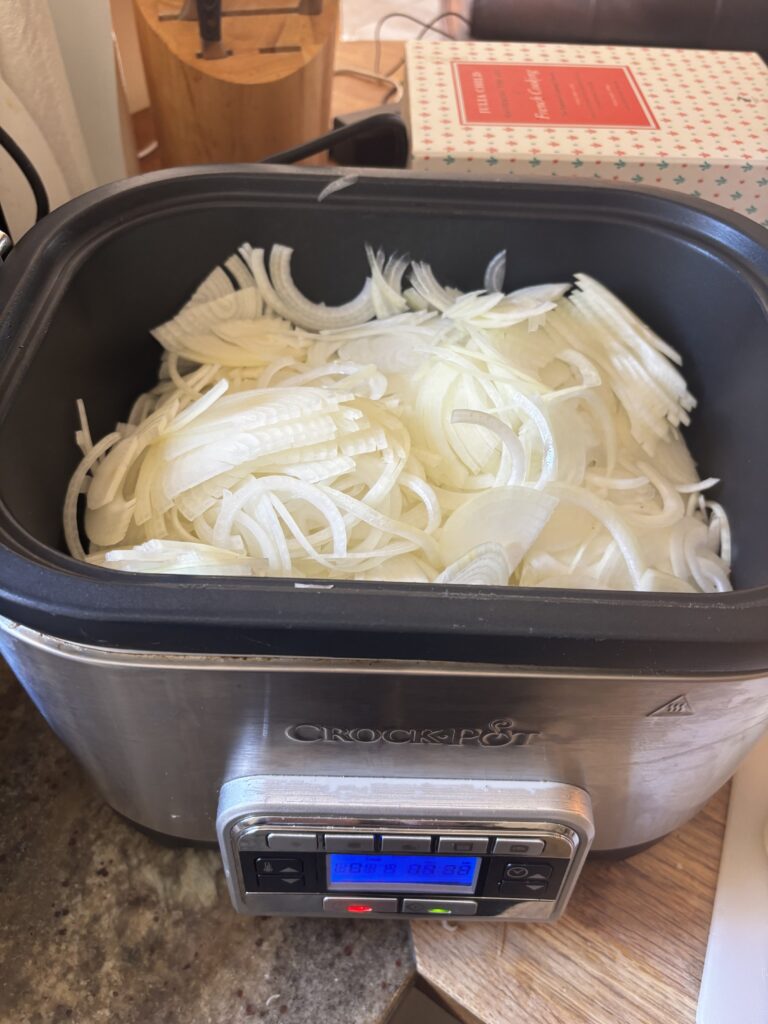
Several recipes on my blog use caramelised onions – they lift many savoury dishes. The Davinator who is sensitive to alliums (the onion and garlic family) can enjoy these onions as the aromatics have been cooked off. I make them overnight in the slow cooker. Quick to prep, minimises the crying and means you don’t have to watch them like a hawk to prevent scorching.

I’m working on a big post – my recipe for Epic Pie, adapted from a recipe by Fallow for Michelin quality Beef & Ale Pie. Caramelised onions are one of the (many) elements, hence this recipe.

I’ve included some tips for best outcomes in the recipe. Two overall recommendations: go big with the recipe you will not regret it. Second, learn to use a mandoline. Video evidence in the clip below but I can chop and slice an onion into the slow cooker in less than 60 seconds. It saves time and tears. It can be hard on the fingers in the beginning but it’s a skill worth mastering. That’s an Oxo Good Grips mandoline set to medium slice width.

Recipe

Ingredients

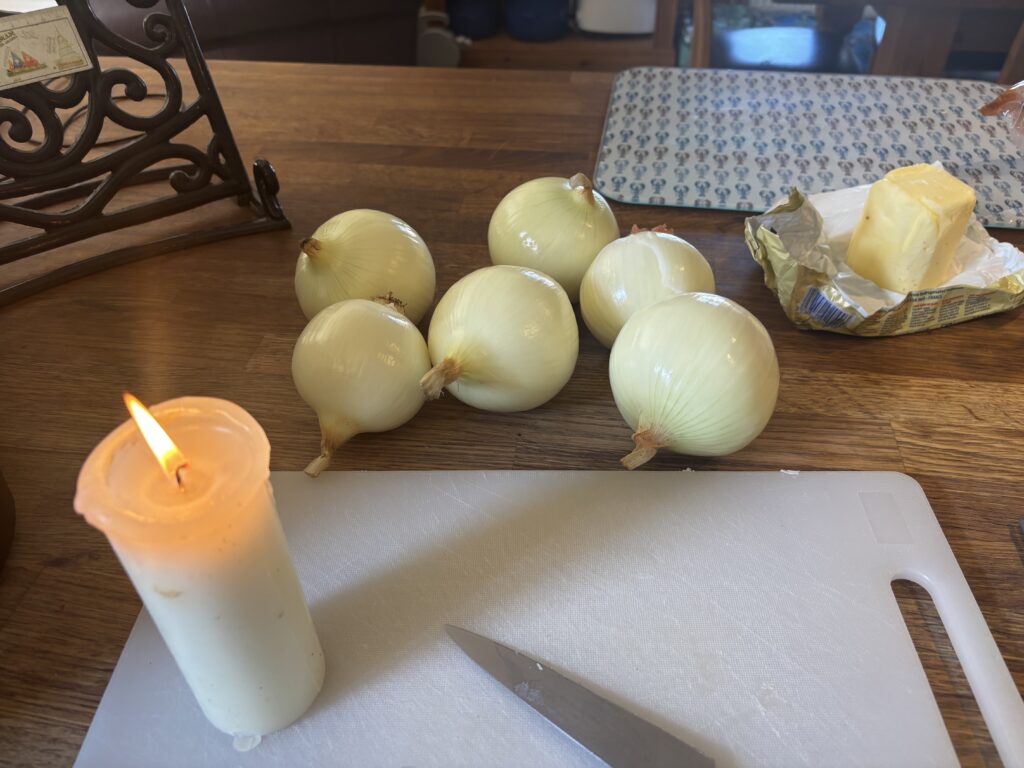
  • 5 pounds (about 6–8 large) yellow or white onions (yellow onions work best for classic flavour; avoid sweet varieties like Vidalia if you want deeper caramelisation)
  • 6 tablespoons butter (melted) or olive oil (or a mix of both for richness) — roughly 1 tablespoon fat per 2 onions
  • 1 teaspoon salt (more or less to taste)
  • Optional add-ins for extra flavour: 1–2 teaspoons brown sugar, 1–2 teaspoons balsamic vinegar, a few minced garlic cloves, or a pinch of black pepper

Instructions

  1. Peel the onions, cut in half and slice thinly (about ⅛–¼ inch thick) into half-moons. Use your food processor with the slicing disk or a mandoline.
  2. Add the sliced onions to your slow cooker, (fill it about halfway to three-quarters full for best results; too little and they may dry out or burn uneven). You’ll see in the video above I slice straight in the with mandoline.
  3. Drizzle the melted butter or olive oil and sprinkle the salt over the onions. Toss everything well with tongs or your hands until evenly coated. (Optional: stir in brown sugar or garlic here.)
  4. Cover and cook on LOW for 8–12 hours (most recipes land around 10 hours). Stir once or twice if you’re home, but it’s fine to leave them unattended. Some people prefer HIGH for 6–8 hours, but low gives more even, deeper flavour.
  5. Check at the end: The onions should be soft, greatly reduced in volume, and a rich golden-brown colour. If there’s excess liquid (common, as onions release a lot of water), prop the lid ajar for the last 1–3 hours to help it evaporate and thicken them into a jammy consistency. Taste and adjust seasoning — stir in balsamic or more salt if needed.

For best results

Know your slow cooker — Models vary in heat. Start checking around 8 hours. If the edges start browning too fast or sticking, give a stir.
For deeper caramelisation after slow cooking: Some people strain off the liquid, then finish the onions in a skillet or on the sauté function (if your slow cooker has one) for 8–10 minutes until glossy and darker.

If I’m making gravy or sauce for savoury pie, I strain off the liquid and add it to the gravy. It’s a little flavour bomb.

How to Use Caramelised Onions

  • On burgers, sandwiches, or pizza
  • For your savoury pies, focaccia
  • In French onion soup, quiches, omelettes, or pasta
  • Mixed into dips, mashed potatoes, or gravy
  • As a side for steaks, roasts, or sausages

Storage

  • Refrigerate in an airtight container for up to 1–2 weeks.
  • Freeze in small portions (e.g., ice cube trays or silicone molds for ~2-tablespoon cubes) for up to 3 months. Thaw as needed — perfect for meal prep.

This is a forgiving recipe — experiment with the exact time and fat amount based on your slow cooker. The result is deeply sweet and savoury onions that elevate almost any savoury dish.

Thanks for reading the blog and trying the recipes. Always happy to answer questions in the comments.

Thanksgiving – My Prep Ahead Menu

| Comments Off on Thanksgiving – My Prep Ahead Menu

Publishing this on Tuesday so I’m a little late for traditional Thanksgiving Day. We’ve been living abroad for many years so we have our celebration on Saturday as we gave up trying to persuade employers and schools that Thursday and Friday are actually legal holidays. We gather friends and family for a meal, to help the Davinator put up the Christmas lights (see photo below) and to decorate the Christmas trees. Yes, there are two. Used to be three but that’s another story…

I’ve worked on my menu over the years to get to maximum ‘prep ahead’ so I can spend time with everyone. The prep ahead approach avoids the kitchen looking like a bomb site when you get up from the table. There are more vegetarians so the menu caters to them as well. Vegans are another kettle of fish but I’ve noted where recipes are easily adapted. Also, I buy in the main course for the vegetarians when I’m busy but usually make a nut loaf (if no nut allergies).

There are several departures from my family’s traditional menu: no corn casserole, no sweet potatoes with marshmallows,no green bean casserole and no pumpkin or pecan pie. That’s mostly personal taste but also not being able to source some of the usual ingredients.

We traditionally eat around 3 or 4pm so I’ve learned to have snacks available or send out for pizza for the decorating crew. We usually have a break between the main meal and dessert – means everyone can eat more. Which is partly the point.

Make ahead recipes are linked below.

Thanksgiving Menu

Do Ahead Schedule

Day Minus Three

Easiest day of all – cut the bread for the stuffing and leave it to dry.

We usually have people staying over the weekend, so I check the bedrooms and bathrooms. Clean sheets, heat on, towels, soap and water. Also, I start bringing down the Christmas boxes. It’s good aerobic exercises as they are up in the storeroom on the top floor.

Day Minus Two

  • Mashed Potatoes
  • Onion Gravy
  • Turkey Gravy

Day Minus One

  • Stuffing
  • Apple & Cranberry Crumble
  • Green Bean Salad

Each recipe has its own instructions for re-heating and serving.

Thanksgiving, at its best, is a three-legged stool: food, family, and friends.The food is the magnet that pulls everyone to the same table.
Family is the anchor, the shared history that makes the day feel sacred.
Friends are the spark, the chosen ones who bring laughter and loosen the room.

It is a day to count our blessings.

Salted Caramel Apple-Cranberry Crumble – Make Ahead

| Comments Off on Salted Caramel Apple-Cranberry Crumble – Make Ahead

The Davinator tried pumpkin pie once and pronounced it ‘weird’. And pie is not my strong suit so I’ve gone with alternative desserts to the traditional pumpkin and pecan pies. Apple cranberry crisp, served with ice cream and topped with salted caramel is the perfect ending to a Thanksgiving meal

Recipe

Serves 10–12 • Fully assemble 1–2 days ahead, bake just before serving so it’s warm and bubbling

Ingredients 

Filling

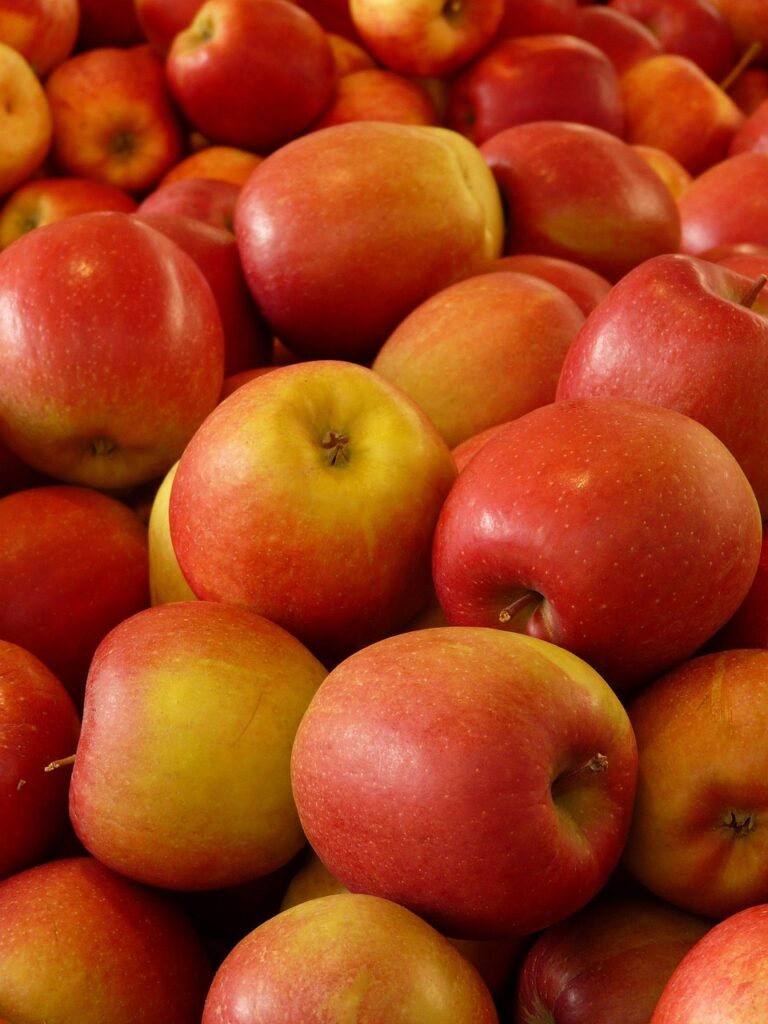
  • 1.3 kg mixed apples (Granny Smith + Honeycrisp/Gala is perfect), peeled, cored, and sliced 5–7 mm thick (about 8–9 medium apples) 
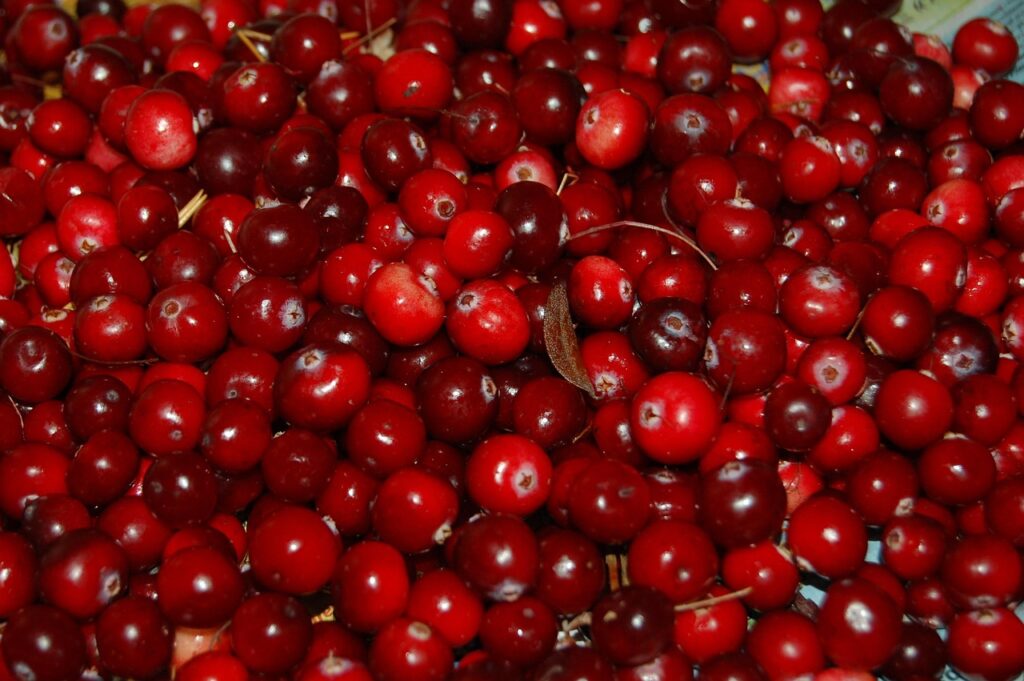
  • 200 g fresh or frozen cranberries (do not thaw if frozen) 
  • 100 g light brown sugar 
  • 30 g plain flour (or cornstarch for gluten-free) 
  • 1½ tsp ground cinnamon 
  • ¼ tsp ground nutmeg (freshly grated if possible) 
  • ¼ tsp fine sea salt 
  • 2 Tbsp (30 ml) fresh lemon juice 
  • 1 tsp vanilla extract 
  • 80–100 ml good-quality salted caramel sauce

Oat Streusel Topping

  • 150 g rolled oats (old-fashioned, not quick) 
  • 120 g plain flour
  • 150 g light brown sugar 
  • 1 tsp ground cinnamon 
  • ¼ tsp fine sea salt 
  • 170 g cold unsalted butter, cubed 
  • 100 g pecans or walnuts, roughly chopped (optional but highly recommended)

Instructions

  1. Butter a 23 × 33 cm (9 × 13 inch) baking dish or equivalent deep ceramic dish. 
  2. In a very large bowl, toss the sliced apples and cranberries with the brown sugar, flour, cinnamon, nutmeg, salt, lemon juice, and vanilla until evenly coated. 
  3. Pour into the prepared dish in an even layer. Drizzle the 80–100 ml salted caramel sauce over the fruit (don’t stir — it will sink in beautifully while baking). 
  4. Make the topping: combine oats, flour, brown sugar, cinnamon, and salt. Add the cold butter cubes and rub in with your fingertips or a pastry cutter until you have a mixture of pea-sized clumps and some sandy bits. Stir in the nuts. 
  5. Scatter the topping evenly over the fruit — pile it high, it will settle. 
  6. Cover tightly with cling film and refrigerate up to 48 hours (flavours get even better).

Thanksgiving Day Baking 

  1. Remove from fridge 30–60 minutes before baking. 
  2. Preheat oven to 190°C (fan 170°C). 
  3. Bake uncovered 45–55 minutes until the topping is deep golden, the edges are bubbling furiously, and the cranberries have burst. 
  4. If the top browns too quickly, loosely lay a piece of foil over it for the last 10–15 minutes. 
  5. Rest 10–15 minutes before serving (this lets the juices thicken slightly).

Serve warm with big scoops of vanilla ice cream — the contrast of hot, tart fruit, salty-sweet caramel, and cold ice cream is pure Thanksgiving magic.

Green Bean Salad with Cherry Tomatoes

| Comments Off on Green Bean Salad with Cherry Tomatoes

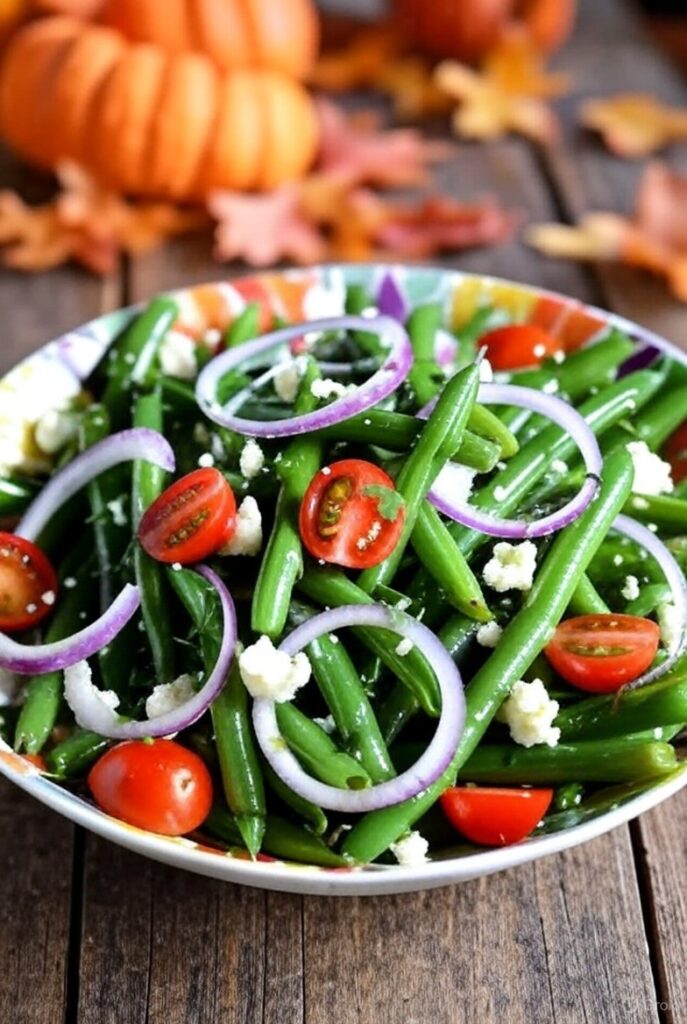
Image by Grok

Green Casserole was invented by Dorcas Reilly in the test kitchens of Campbells Soup. The traditional recipe used two of their products; condensed cream of mushroom soup and French’s fried onions. Campbells estimated it was served at 20 million Thanksgiving dinners in 2020. I’ve experimented with ‘gourmet’ versions and – to be frank – I still find it uninspiring. There’s plenty of rich food on the table, a green bean salad is fresh, bright and crunchy. Also, easy to make ahead and doesn’t use any oven space.

Green Bean Salad with Cherry Tomatoes, Feta, Red Onion & Dijon Vinaigrette 

Serves 10–12 as a side

Ingredients 

For the salad

  • 1.2 kg fresh green beans (regular or thin haricots verts), trimmed 
  • 400 g cherry tomatoes, halved (mixed colours look prettiest) 
  • 1 medium red onion (about 150 g), very thinly sliced 
  • 200 g feta cheese, crumbled (use Greek feta in brine for best flavour) 
  • – Optional: 50 g toasted pine nuts or flaked almonds for extra crunch 

For the Dijon vinaigrette (makes about 150 ml) 

  • 3 Tbsp Dijon mustard 
  • 2 Tbsp honey 
  • 60 ml red wine vinegar 
  • 120 ml extra-virgin olive oil 
  • 1 small shallot, finely minced
  • ½ tsp fine sea salt 
  • ¼ tsp freshly ground black pepper 

Instructions

Make 1–2 days ahead 

  1. Blanch the green beans:  
    – Bring a large pot of water to a boil and add 1 Tbsp salt. 
    – Add green beans and cook 3 minutes only (they should stay bright green and crisp-tender). 
    – Immediately drain and plunge into a big bowl of ice water for 2 minutes. 
    – Drain well, pat dry with a clean tea towel or paper towels. 
      → You can store the blanched beans in the fridge up to 2 days at this point
  2. Make the vinaigrette  
    – Put mustard, honey, vinegar, shallot, salt, and pepper in a jar with a tight lid. 
    – Shake well, then add olive oil and shake again until thick and creamy. 
    – Taste and add a little more honey or salt if needed. 
      → Keeps in the fridge for 1 week.
  3. Assemble the salad (up to 2 days ahead) 
    – In a large mixing bowl, combine blanched green beans, cherry tomatoes, and sliced red onion.
    – Pour over about ¾ of the vinaigrette and toss gently. 
    – Transfer to your serving bowl. 
    – Cover tightly with cling film and refrigerate.
  4.    Serving
    – Take the salad out of the fridge 30–60 minutes before serving so it’s not ice-cold. 
    – Scatter crumbled feta (and toasted nuts if using) on top. 
    – Drizzle the remaining vinaigrette over the top, give it a gentle toss, and serve. 

This salad is light, colourful, and gives everyone a fresh break from all the rich foods. Kids and adults both love it, and you’ll get tons of compliments with almost no work on the day. 

Ultimate Onion Gravy Recipe

| Comments Off on Ultimate Onion Gravy Recipe

Image by Joseph Mucira from Pixabay

Onion gravy is a taste treat and not just for vegetarians. I caramelise the onions in the slow cooker a few days before. It’s amazing to slice six onions with a mandoline, leave them for 12 hours and come back to divine flavour bombs. I’ve included instructions on caramelising as you make the gravy but I highly recommend the slow cooked approach. Here’s a recipe for slow cooker onions.

This gravy improves with a couple of days in the fridge, so make ahead for taste as well as convenience.

Ingredients

  • 50 g butter (or 3–4 tbsp olive oil)
  • 3 large onions, very thinly sliced (use a mandoline if possible)
  • 1 tsp sugar (helps caramelisation)
  • ½ tsp salt (for the onions)
  • 2 tbsp plain flour (or gluten-free flour)
  • 500 ml strong good quality vegetable stock (hot)
  • 50 ml red wine or brandy (optional but highly recommended – replace with more stock if you prefer alcohol-free)
  • 1 tbsp balsamic vinegar or Worcestershire sauce
  •  1 tsp Marmite or Vegemite (optional, but gives that umami “roast dinner” flavour)
  • 1 sprig fresh thyme or ½ tsp dried thyme
  • Freshly ground black pepper

Instructions

  1. Caramelise the onions – low and slow. Melt the 50 g butter in a wide, heavy-bottomed pan over medium-low heat. Add the sliced onions, sugar, and ½ tsp salt. Stir well, then cover and cook for 10 minutes to soften. Remove the lid, reduce heat to low, and cook 35–50 minutes, stirring every 5–8 minutes, until the onions are deep golden-brown, jammy, and sweet. Don’t rush – proper caramelisation = proper flavour.
  2.  Build the gravy. Sprinkle the 2 tbsp flour over the onions and stir for 2 minutes to cook out the raw flour taste. Pour in the red wine or brandy (if using) and let it bubble for 1–2 minutes until the alcohol is burned off. Gradually add the hot stock while stirring constantly to avoid lumps. Add balsamic/Worcestershire, Marmite, thyme, and a good grind of black pepper.
  3. Simmer & finish. Bring to a gentle simmer and cook 10–15 minutes, stirring occasionally, until thickened to your liking. Taste and adjust seasoning; often needs more pepper and sometimes a touch more balsamic. For silky-smooth restaurant-style gravy, strain through a fine sieve, push the onions through with a spoon to keep maximum flavour or blend with a stick blender.
  4. Allow to cool to room temperature. Refrigerate up to 4 days or freeze up to 3 months. Reheat gently with a splash of water or stock.

· 

Easy Make-Ahead Stuffing for Thanksgiving

| Comments Off on Easy Make-Ahead Stuffing for Thanksgiving

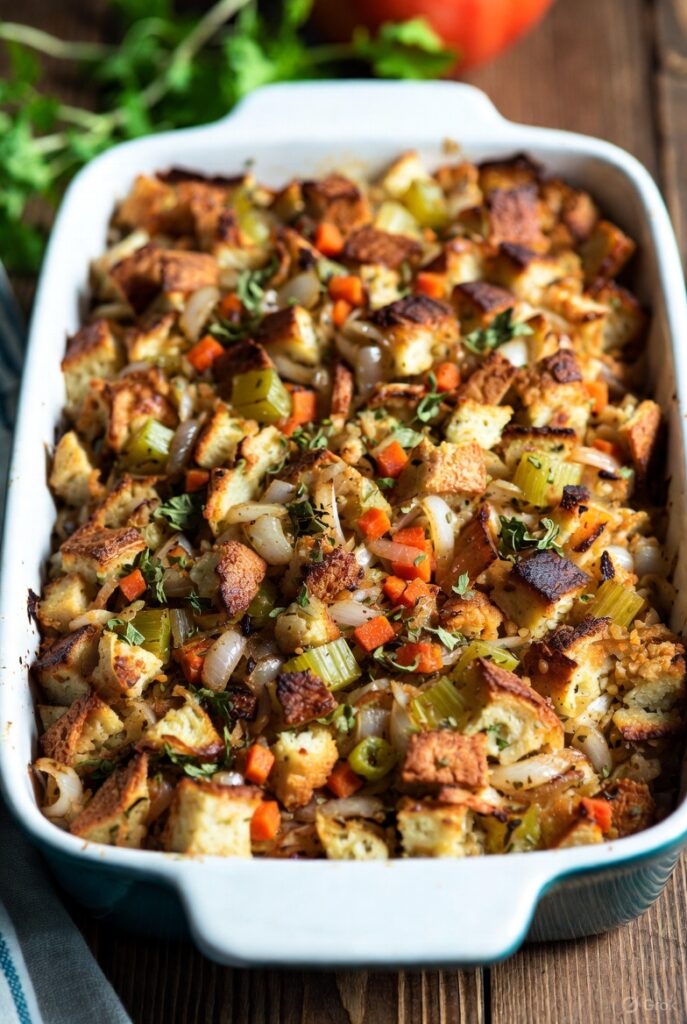
Image from Grok

I don’t put the stuffing in the turkey. There was a food poisoning incident in our extended family (we shall pass over that with no detail) and in general I think it’s not recommended anymore. Also, once it’s been in the turkey, hard to call it ‘vegetarian’ with a straight face. I find it easier to make one stuffing recipe and then allow guests to drown it in onion or turkey gravy as they please.

Recipe – serves 8 to 10 with leftovers

Ingredients

  • 800-1000 g dried bread cubes (about 1–1.5 large loaves; use a mix of sourdough, French, or country bread for best texture)
  • 170 g unsalted butter
  • 2 medium onions, finely diced (about 2½ cups)
  • 4 stalks celery, finely diced (about 1½–2 cups)
  • 2 medium carrots, finely diced (optional, but adds sweetness; ~1 cup)
  • 600-850 mls vegetable broth (start with 600mls, add more if needed)
  • 2 large eggs, lightly beaten (omit or replace with 2 flax eggs* for vegan)
  • 15 g fresh parsley, chopped
  • 2–3 tsp poultry seasoning (or make your own: 1 tsp sage + ¾ tsp thyme + ½ tsp marjoram + ¼ tsp rosemary + pinch nutmeg)
  • 1 tsp dried sage (extra if you love sage flavor)
  • 1 tsp kosher salt (or to taste)
  • ½ tsp freshly ground black pepper
  • Optional add-ins (pick 1–2):
    • 150 g sautéed mushrooms
    • 100 g dried cranberries or chopped apples
    • 100 g toasted pecans or chestnuts
    • 100 g cooked wild rice or quinoa

Instructions

  1. Dry the bread (1–2 days ahead or same day):
    • Cube bread into ¾-inch pieces. Spread on baking sheets and let sit out overnight, or bake at 150°C (300°F) for 30–45 minutes, tossing occasionally, until dry and lightly toasted.
  2. Sauté vegetables:
    • Melt butter in a large skillet over medium heat.
    • Add onion, celery, and carrot (if using). Cook 8–12 minutes until soft and translucent.
  3. Season:
    • Stir in poultry seasoning, dried sage, salt, and pepper. Cook 1 minute to bloom the herbs.
  4. Assemble:
    • In a very large bowl, combine dried bread cubes and the vegetable mixture.
    • Add parsley and any optional add-ins.
    • Drizzle with 2½ cups vegetable broth and toss gently. The bread should be moist but not soggy—add up to 1 more cup broth if it still looks dry.
    • Taste and adjust salt/pepper.
  5. Add binder:
    • Pour beaten eggs over the mixture and fold in gently.
  6. Bake:
    • Preheat oven to 350°F (175°C).
    • Transfer stuffing to a buttered 9×13-inch (or larger) baking dish.
    • Dot top with extra butter if desired.
    • Cover with foil and bake 30 minutes.
    • Uncover and bake another 15–25 minutes until top is golden and slightly crisp.

Fully assemble & refrigerate (up to 2 days ahead) – RECOMMENDED

  • Complete steps 1–5 (dry the bread, sauté vegetables, mix everything including the eggs and broth).
  • Pack the unbaked stuffing tightly into your buttered baking dish, cover well with plastic wrap or foil, and refrigerate up to 48 hours.
  • When ready to bake: let it sit at room temperature 30–60 minutes (so the dish doesn’t crack from temperature shock), then bake as directed, adding an extra 5–10 minutes to the covered baking time since it’s cold.

Make-Ahead Creamy Mashed Potatoes for Holidays

| Comments Off on Make-Ahead Creamy Mashed Potatoes for Holidays

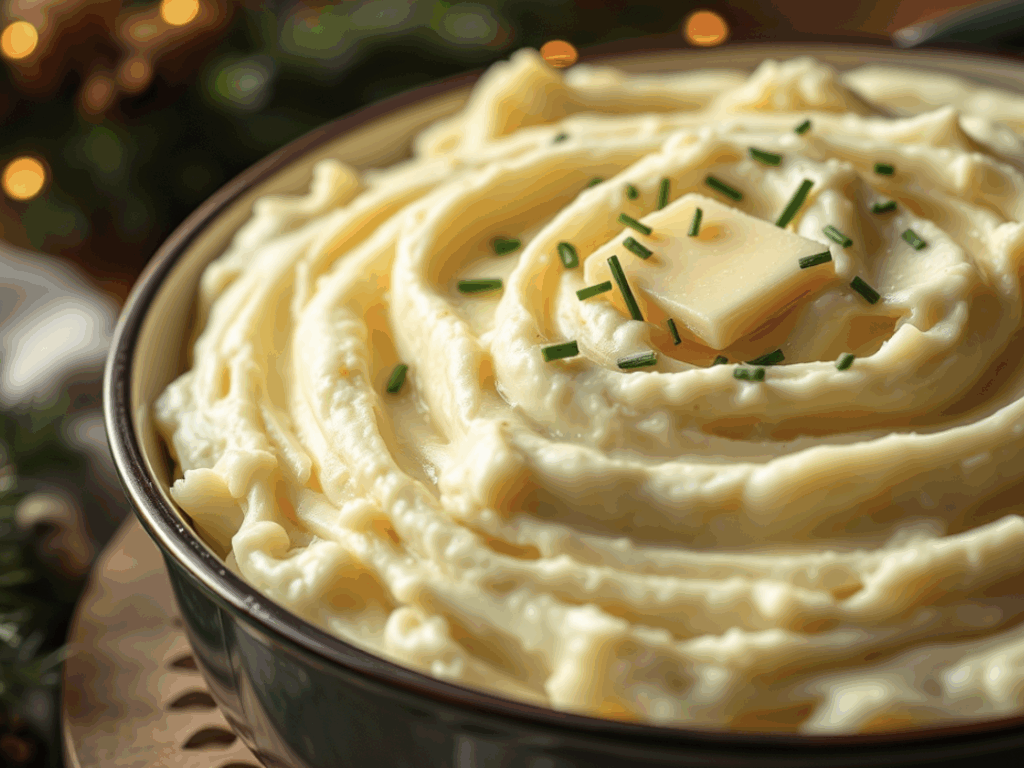
Make ahead mashed potatoes was a game changer for me. I love mashed potatoes but making enough for 12 people can turn the kitchen into a bomb site. And it’s normally a last minute thing so when you get up from the Thanksgiving table it’s all waiting for you. This one also uses the slow cooker for warming so it saves precious oven space on the day.

Can be made 1 to 3 days ahead.

Recipe – Makes enough for 10 to 12 people.

Ingredients

  • 4 kg Yukon Gold potatoes (or half Yukon Gold / half starchy floury potatoes), peeled and cut into 4 cm chunks 
  • 225 g salted butter, cut into pieces 
  • 300 ml heavy cream (whipping cream, 35–38% fat) 
  • 250 ml whole milk (plus a little extra when reheating if needed) 
  • 225 g full-fat cream cheese, softened – this keeps them ultra-creamy after reheating – use Philadelphia, there is something about that is not replicable
  • 2½–3 tsp fine sea salt (start with 2½ tsp, adjust to taste) 
  • 1 tsp freshly ground black pepper 
  • Optional finishing: 3–4 Tbsp chopped fresh chives or parsley 

Instructions

1. Put the peeled potato chunks in a large pot, cover with cold water, add 1 Tbsp salt. Bring to a boil, then simmer 15–20 minutes until completely tender when pierced with a knife. 

2. While the potatoes cook, gently warm the butter, cream, and milk together in a saucepan until the butter melts and the mixture is steaming hot (do not boil). 

3. Drain the potatoes very well. Let them sit in the colander for 3–4 minutes so excess steam evaporates. 

4. Return the potatoes to the still-warm pot and place over the lowest heat for 1 minute, stirring constantly, to dry them out further (this step prevents watery mash). 

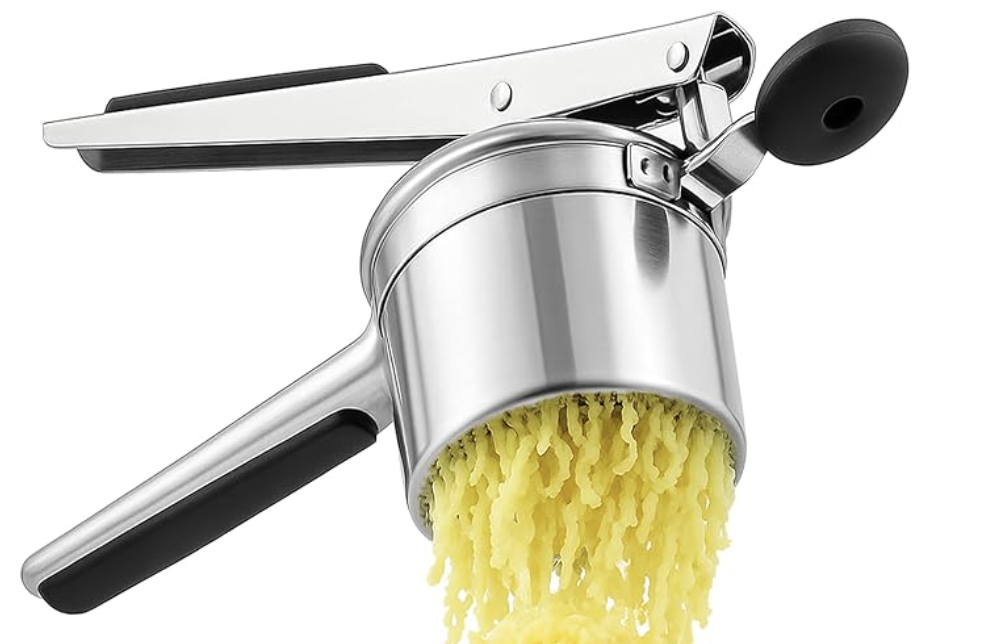
5. Mash or rice the potatoes (a potato ricer gives the silkiest texture).  I get out the ricer, one of it;s few outings every year but there is no substitute.

6. Immediately add the warm cream/butter mixture, the softened cream cheese, salt, and pepper. Fold gently with a large spatula until just combined – do not overwork or they turn gluey. 

7. Taste and add more salt if needed (they should taste slightly overseasoned because the flavor mellows in the fridge). 

8. Transfer to a buttered 23×33 cm (9×13 inch) baking dish or two smaller dishes. I put mine straight into the slow cooker pot. Smooth the top, dot with a few extra knobs of butter, and sprinkle with chives or paprika if you like. 

9. Cool completely, then cover tightly: press plastic wrap directly onto the surface, then cover with foil. Refrigerate up to 3 days.

Ricer – a workout for your hands but worth the effort

Reheating on Thanksgiving Day – two best methods

Method 1 – Oven (gives the best creamy texture)** 

  • Remove from fridge 1 hour before reheating. 
  • Dot with 2–3 extra Tbsp butter and splash 3–4 Tbsp milk or cream over the top. 
  • Cover with foil and bake at 180°C (fan 160°C) for 30–40 minutes. 
  • Remove foil, stir well, and continue baking 10–15 minutes uncovered until piping hot. Stir again before serving.

Method 2 – Slow cooker (mostly hands-off) 

  • Transfer cold potatoes to a buttered slow cooker. 
  • Dot with butter and add a splash of milk. 
  • -Heat on LOW for 2–3 hours, stirring every 45–60 minutes. Switch to WARM until ready to serve. These stay silky-smooth and taste like you just made them

No more cupcakes….for a while

There is a sourdough version of this recipe but I decided to do a yeast raised version for a couple of reasons. The first is that it is more predictable and easier to work with. Second, the Davinator has adopted a lower carbohydrate diet to improve his health. This doesn’t mean no bread but less bread. And keeping sourdough starter vibrant means you bake a lot or you throw a lot of starter down the drain. I know it’s only flour and water but tipping it into the sink 3 or 4 times a week was too much. We miss the sourdough but needs must.

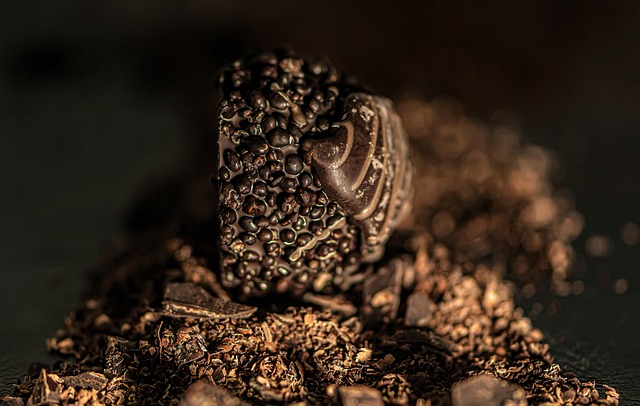
Comparing ingredients – it is easier to work with. The amount of yeast allows for an egg and vanilla. Other than that, much the same. You know my views on chocolate – buy the best quality cocoa and dark chocolate chips you can get your hands on.

This is not cake or ‘quick bread’ (cake by another name). It’s savoury and it’s highest and best use is with a mild and creamy cheese. Or a slab of butter.

I make this recipe then separate into two loaves at the second rise. It’s not cake but it is rich and a tiny bit sweet – you won’t be making sandwiches of it. Well, you might but that’s a you thing. A one pound loaf produces smaller slices and it’s great as a little snack or with your cheese course.

The whole wheat flour is optional, go all white if that’s what you’ve got.

Let’s cook.

Recipe

Ingredients

  • 420 grams strong white flour
  • 80 grams whole wheat flour
  • 30g (1/3 cup) unsweetened cocoa powder (Dutch-processed preferred)
  • 50 gr (¼ cup) granulated sugar
  • 1 tablespoon (10g) active dry yeast
  • 1 tsp salt
  • 240 mls (1 cup) warm water (110°F/45°C, not hotter to avoid killing yeast)
  • 60 grams (¼ cup) unsalted butter, melted (or vegetable oil but neutral taste, not olive or coconut)
  • 1 large egg
  • 1 tsp vanilla extract
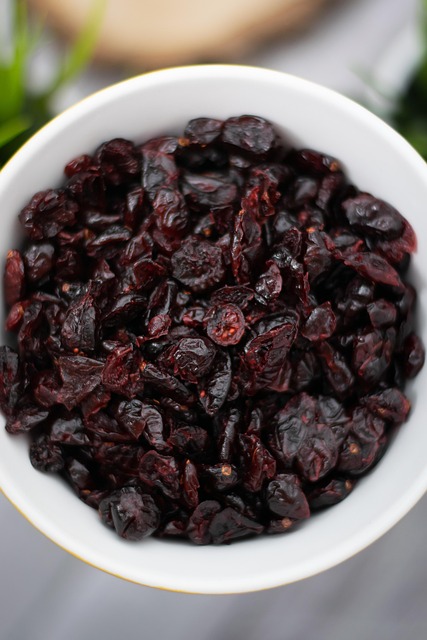
  • 120 grams (3/4 cup) dried cranberries (soak in warm water for 10 minutes, then drain) Do not omit the soak step – the dried cranberries will steal water from the dough if you put them in dry.
  • 130 grams (3/4 cup) top quality dark chocolate chips.
  • 1 egg yolk + 1 tablespoon of water for glazing

Instructions

  1. Activate the Yeast (5–10 minutes): In a small bowl, combine warm water and a pinch of sugar. Sprinkle yeast over the water, stir gently, and let sit for 5–10 minutes until foamy. If it doesn’t foam, use fresh yeast.
  2. Mix the Dry Ingredients: In a large mixing bowl or stand mixer bowl, whisk flour, cocoa powder, sugar, and salt until well combined.
  3. Form the Dough: Add the foamy yeast mixture, melted butter (or oil), egg, and vanilla extract to the dry ingredients. Stir with a wooden spoon or mix on low speed with the dough hook until a shaggy dough forms.
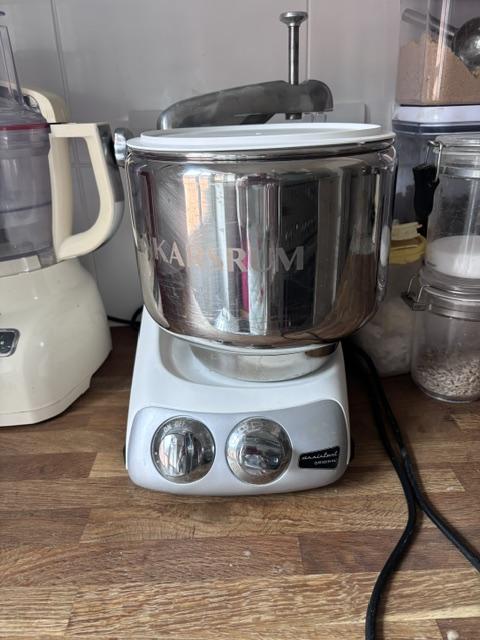
  4. Knead: this is a high hydration dough so strongly recommend that you need in the stand mixer for 8 to 10 minutes. You can knead by hand on a lightly floured surface, likewise 8 to 10 minutes. The challenge of hand kneading is not to let the dough pick up too much flour, it will make the dough tough, reduce the hydration percentage and inhibit the rise. The dough should be soft and slightly tacky but not sticky. Add flour 1 tbsp at a time if too sticky, but keep it minimal for a tender crumb.
  5. Incorporate Mix-Ins: Flatten the dough on a lightly floured surface and sprinkle dried cranberries and chocolate chips over it. Fold and knead gently for 1–2 minutes until evenly distributed. (Some chips may not fully incorporate; that’s fine.)
  6. First Rise:Shape the dough into a ball and place in a lightly greased bowl. Cover with plastic wrap or a damp towel. Let rise in a warm place (75–85°F/24–29°C) until doubled. I’ve had varied results on time; rises like mad on a warm day, slow as molasses if cooler.
  7. Shape the Loaf: Punch down the risen dough gently. On a lightly floured surface, shape it into a rectangle the width of your loaf pan. Roll tightly into a log, tucking ends under. Place seam-side down in a greased 9×5-inch loaf pan. I usually do this as 2 loaves in smaller pans.
  8. Second Rise: Cover loosely with plastic wrap or a towel and let rise in a warm place until the dough crests about 1 inch above the pan’s edge. It will not ‘double’ again.
  9. Preheat and Prep (15 minutes before baking):Preheat oven to 350°F (175°C). If using egg wash, whisk egg yolk and water, then brush gently over the dough. For dairy-free, brush with maple syrup-water mix for a subtle sheen.
  10. Bake (35–40 minutes): Bake for 35–40 minutes, until the bread sounds hollow when tapped or reaches 190–200°F (88–93°C) internally. Tent with foil after 25 minutes if browning too fast.
  11. Expect melty chocolate pockets and juicy cranberry bursts—both add to the charm!
  12. Cool and Serve: Remove from the pan and cool on a wire rack for at least 1 hour before slicing to set the crumb. (Cutting early will make it gummy.) Enjoy plain, with butter, peanut butter, cream cheese, or with a dusting of powdered sugar.

Unusual but no pictures of the finished product. I can’t keep it around long enough to photograph.

Thank you for reading the blog. Send suggestions, comments etc.

Operation Buttercream – Delivered

| Comments Off on Operation Buttercream – Delivered

I have had the worst writers block ever about this blog post and I don’t know why. I hope this time I can break through…. It was a joyful project from beginning to end. Yes, there was the odd anxiety dream but only things that are difficult are worth doing.

It has been more than a month since the wedding, but being honest here – I could not think about cupcakes for quite some time. Starting off – congratulations to the happy couple. I think they pulled off their vision for a perfect wedding. The weather cooperated – with the tiniest of showers in the afternoon that was barely noticed by the people toasting marshmallows over a fire pit. Lovely bride, beaming groom and an epic speech by the father of the bride.

My thanks to the team who delivered Operation Buttercream;

  • Carol, my sister in law who did stand out detailed work, cutting out the centres of so many cupcakes, then filling them with salted caramel or white chocolate ganache. And then using tweezers to place the tiny decorations. I do not have the patience for this – Carol was superb.
  • Lisa, my artist friend who applied her artist eye to (36 x 3) 108 pink rose buds in varying shades of pink, plus extras for the wedding cake, plus piping a lot of leaves. I pass silently over the ‘roses not peonies’ discussion. What a good sport. Not to mention I said ‘do a design for the cake’ and handed her a notebook and pencil. No warning. And her inspired idea for an emergency repair kit.
  • the Davinator, who made the display stand for the cupcakes (see photo below) which is the Colosseum of Cupcakes, supported me, turned a blind eye to whatever equipment and supplies I ordered and;
  • Chris, husband of Lisa the Artist, who with the Davinator kept Team Cupcake fed, watered and working.

I want to thank everyone who had cupcakes forced upon them in the run up to the wedding, the coffee morning at the church next door, Christmas gatherings, family and friends – thank you for being enthusiastic consumers of cupcakes. If I had to guess who ate the most cupcakes I would bet on a tie between the groom and the father of the bride.

img_2654
The Cupcake Colosseum, made by the Davinator. The bottom row has the specialty cupcakes; vegan and lactose intolerant, made by La Petite Bouche Bakery.

What did we deliver on the day?

Fruitcake with two coats of vanilla buttercream icing, decorated with strawberry flavoured pink roses and leaves.
  • a dozen each of vegan cupcakes and lactose intolerant cupcakes. I sought out a specialty baker, La Petite Bouche Bakery. Working with no dairy – so no butter, milk, yoghurt etc is a challenge. The results are good and much better than I could do myself.

How did we do it?

Planning and practice rule. Also having willing helpers. The wedding was on Saturday, here’s the schedule, starting a week before.

  • Sunday – make 4 batches of plain buttercream, 4 batches of salted caramel and 6 dozen vanilla cupcakes as bases for the white chocolate and the strawberry buttercream,
  • Monday – 3 dozen chocolate cupcakes, 3 dozen carrot cake cupcakes
  • Tuesday – make white chocolate ganache and white chocolate icing, fill, top, ice and decorate 3 dozen white chocolate cupcakes,
  • Wednesday (morning) – fill, top and decorate 3 dozen salted caramel chocolate cupcakes
  • Wednesday (afternoon) – make deep pink strawberry flavoured buttercream icing, practice piping roses.
  • Thursday morning – ice 3 dozen carrot cake cupcakes (these were a single rose piped directly on to the cupcake). The piping bags were filled with white icing, edged with bright orange. (See note below on cling film method).
  • Thursday afternoon – make 3 shades of pink icing using the deep pink to colour it – this produced batches of icing that were tonally the same without trying to ‘match’. Then pipe approximately 120 pink rose buds. The men put us under pressure (promising cocktails and dinner) so we iced the tops white and then assembled with 3 rosebuds per cupcake and piped the leaves on 3 dozen cupcakes in about 45 minutes. We had arrived at confident.
  • Rested on our laurels overnight….
  • Friday morning – iced the cake, a crumb coat and then a coat of super white buttercream. Lisa did the the design for the cake, we watched a couple of Youtube videos about how to pipe climbing roses, leaves and stems and then freestyled the cake. Finished by 11 am!
Cupcake filled refrigerate
Did I mention we bought a fridge? The cupcakes ‘resting’ before their journey to the wedding.

My nightmares about working through the night on Friday came to nothing. The Davinator collected the speciality cupcakes in the early afternoon, Carol departed for the wedding with our in-laws, Chris and Lisa headed for home. We had a peaceful evening to relax and prepare for the wedding the next day.

Up early the next morning, breakfast, we loaded the car and arrived at the wedding in good order. The emergency repair kit was not necessary but oh so comforting to have.

And the rest was history.

Thank you for continuing to read the blog during Operation Buttercream. And sorry for the long hiatus while I got my mind around writing this final episode. Back to normal service, I hope. I’ve been cooking a lot and using AI with good effect to refine some of my recipes. Coming up – chocolate bread (non-sourdough edition), brioche rolls and hot cross buns.